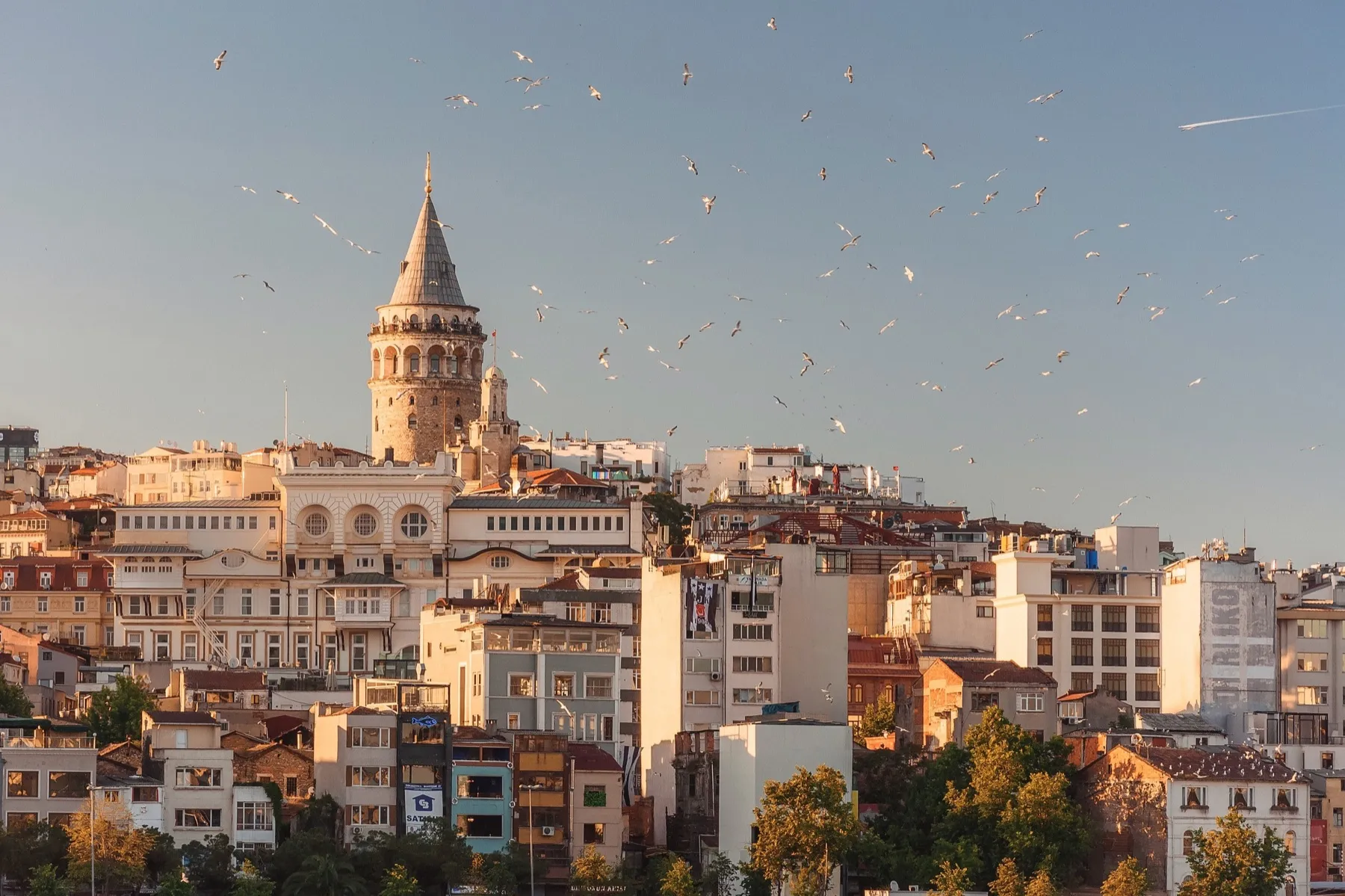
"The only city on two continents." You'll hear it repeated. It isn't true. Istanbul is just the biggest, by a very long way.
The Europe–Asia line, by convention, follows the Urals, the Ural River and the Caucasus, then the Bosphorus. Other cities sit on it: Atyrau and Orenburg on the Ural River, Magnitogorsk by its own motto, and by one listing Suez. The first three have under 600,000 people each. Istanbul had 15,754,053 on 31 December 2025, about two-thirds of them in Europe.
Now the swim. At its narrowest, between Rumelihisarı and Anadoluhisarı, the Bosphorus is about 700 metres across. It looks swimmable. Don't. Türkiye's foreign ministry says strong currents, sharp turns and unpredictable weather make it hard to navigate, and about 107 vessels pass a day, against about 17 in 1936. Roughly a ship every 13 minutes.
The fortresses face each other across that narrow point: Bayezid I's Anadoluhisarı on the Asian bank, 1393–94; Mehmed II's Rumelihisarı facing it, 1452.
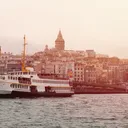
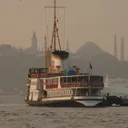
For centuries the crossing meant a boat. Then 30 October 1973: the first bridge, today's 15 July Martyrs Bridge. The Fatih Sultan Mehmet Bridge followed in 1988, the Yavuz Sultan Selim in 2016, Marmaray under the water, the Eurasia tunnel after it. The ferries still run.
On 15 May 2005 Venus Williams and İpek Şenoğlu played five minutes of tennis on that first bridge, billed as the first match on two continents. Every October since 1979, marathon runners cross it from Asia to Europe.
Cross on purpose, by commuter ferry: Kadıköy to Eminönü is Asia to Europe for one İstanbulkart tap. For the narrow point, go up the European shore to Rumelihisarı and look across at Anadoluhisarı: about 700 metres. Look, don't swim.