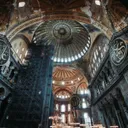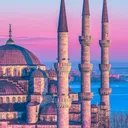
Church, mosque, museum, mosque again. That's the tour version. Count again: more lives than that, and the dome fell more than once.
It starts with a riot. In January 532 the Nika revolt burned the church on this spot. On 23 February, Justinian began a new one.
Its designers, Anthemius of Tralles and Isidore of Miletus, were mathematicians first, by one account. Opening day: 27 December 537.
Legend says Justinian saw it finished and declared he had outdone Solomon.
Then the dome fell. An earthquake in 558 (one source says 557) brought part of it down, about twenty-one years in. Isidore the Younger, nephew of one of the architects, rebuilt it higher and lighter. Not the last fall: a western arch went in 989, parts again in 1346.
Now the life the tour version skips. The Fourth Crusade took the city in 1204; Baldwin I was crowned here on 16 May. For 57 years, a Latin Catholic cathedral. Then Orthodox again.
1453: Mehmed II made it a mosque within days. 1935: a museum. 10 July 2020: the Council of State annulled the museum decision, and Friday prayers were held on the 24th.
So count: church, Catholic cathedral, church, mosque, museum, mosque. Six, if you like. Or one building that changed with the city.
Since 15 January 2024 worshippers use the ground floor and visitors take a gallery route, with a ticket priced in euros for foreigners. You enter by a ramp under the Bayezid II minaret, south side, and see the nave from the gallery. Dress for a mosque: shoulders and knees covered, hair for women; scarves sold at the booth. Hours weren't settled when we checked, so read what's posted. The insider move: while everyone films the dome, look down at the south gallery parapets, where a Norseman carved his name: its own story.