Byzantium needed somewhere to put people it wanted gone, but not far. Islands in the Marmara did the job.
Empresses Irene, Euphrosyne, Theophano, Zoe and Anna Dalassena were exiled to a convent on Büyükada. Two emperors named Romanos went to Kınalıada; Patriarch Ignatios to Sedef in 857. Sivriada was a prison.
Much later came one more exile. From April 1929 to July 1933 the exile was Leon Trotsky, who wrote his History of the Russian Revolution on Büyükada.
By then the islands had a second life. In the later 19th century the larger ones became summer resorts; Büyükada keeps the wooden mansions along Çankaya Caddesi.
And no cars. Fossil-fuel vehicles are banned except for security, health, fire and municipal services. The way around was the horse-drawn phaeton.
Until January 2020, when 81 phaeton horses were found with glanders and put down. The Governorship banned the carriages for three months; then a decision banned horses for phaetons altogether. Not a vote. An outbreak.
Electric vehicles took over: 13-seaters paid for with an Ada Kart or Istanbulkart. Then battery-powered vehicles spread, and by October 2021 the municipality limited them to residents over 65, couriers, officials and permit holders. The deputy mayor's count: about 16,000 residents, 8,000 to 10,000 battery vehicles and e-bikes. Even a car-free island argues about traffic.
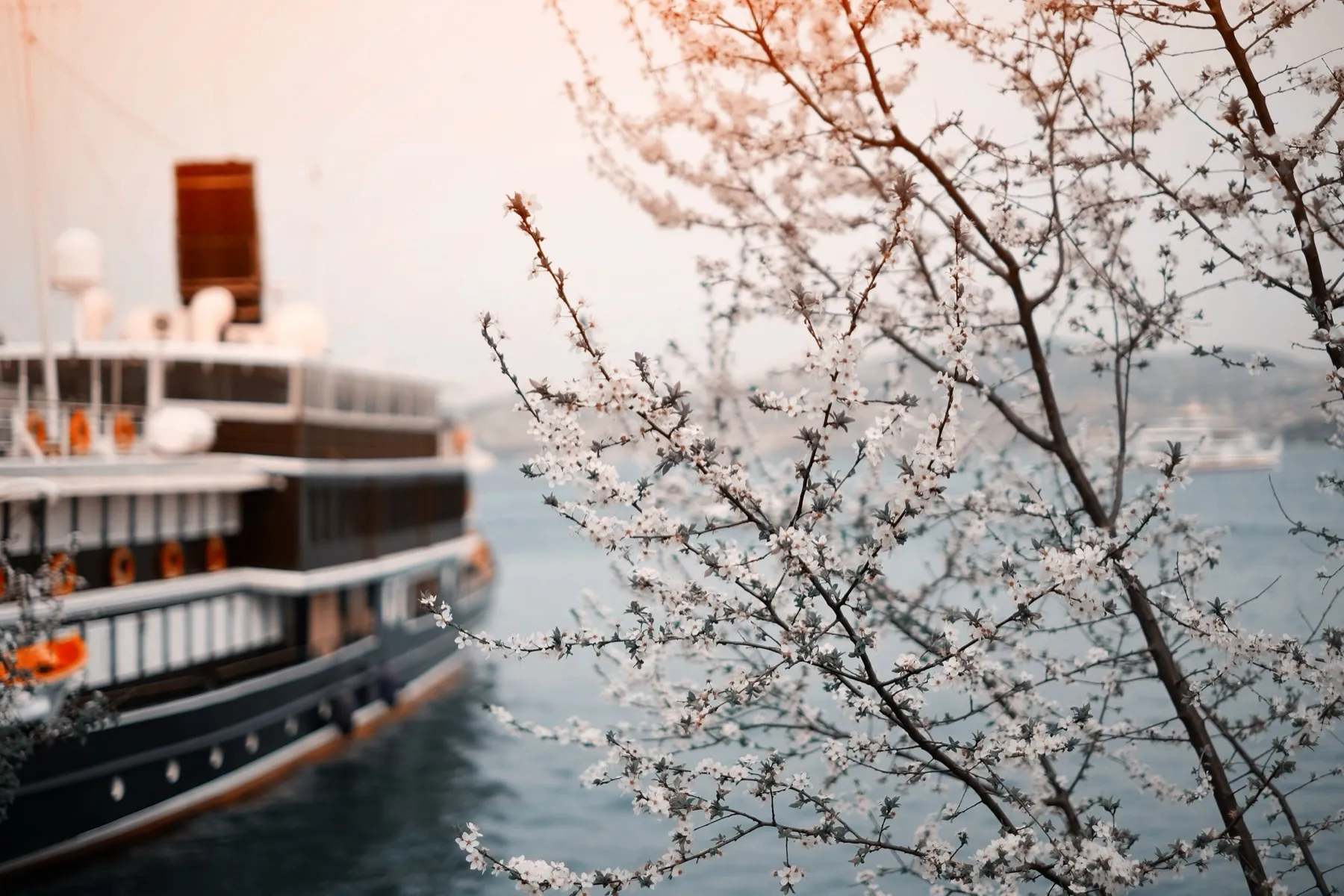
Take the Kabataş–Adalar ferry, via Eminönü and Kadıköy, about an hour and a half to Büyükada. Skip the pier-side crowd: İETT minibus or your feet, then the steep 30-minute climb from Birlik Meydanı to Aya Yorgi (mobbed on 23 April). Heybeliada and Burgazada are quieter. Storms can cancel sailings; check Şehir Hatları on the day. A day, not a base.