Around 1502, Leonardo da Vinci offered the Ottoman sultan a single stone arch across the Golden Horn, high enough for a ship under sail to pass beneath. No reply survives.
The drawing does: folio 66r of Paris Manuscript L, at the Institut de France. One arch from Constantinople to Pera, for Sultan Bayezid II. Span 400 braccia, about 238 metres; height 70, about 42.
The letter survives too, as a Turkish translation in the Topkapı Palace Museum.
Nothing was built.
In 1952 two scholars, Franz Babinger and Ludwig Heydenreich, dated the letter 1502/3; Babinger is credited with tying it to the Paris drawing.
Even that is argued: one database says 1502; a 2024 report cites an archival note giving 918 in the Islamic calendar, about 1512. Did the sultan even ask? MIT says Bayezid sought bridge designs in 1502; the same report finds no archival evidence of a commission and thinks Leonardo pitched it himself.
Would it have stood? In 2019 an MIT team, Karly Bast, Michelle Xie and John Ochsendorf, built a 1:500 model from 126 3D-printed blocks. Verdict: in stone, by gravity alone, yes.
The twist is in Norway. Pushed by the artist Vebjørn Sand, a Leonardo Bridge opened in 2001 over the E18 road at Ås: 109 metres long, 40-metre main span. A footbridge over a motorway, not a Golden Horn. Even its material is disputed: timber, or steel and concrete.
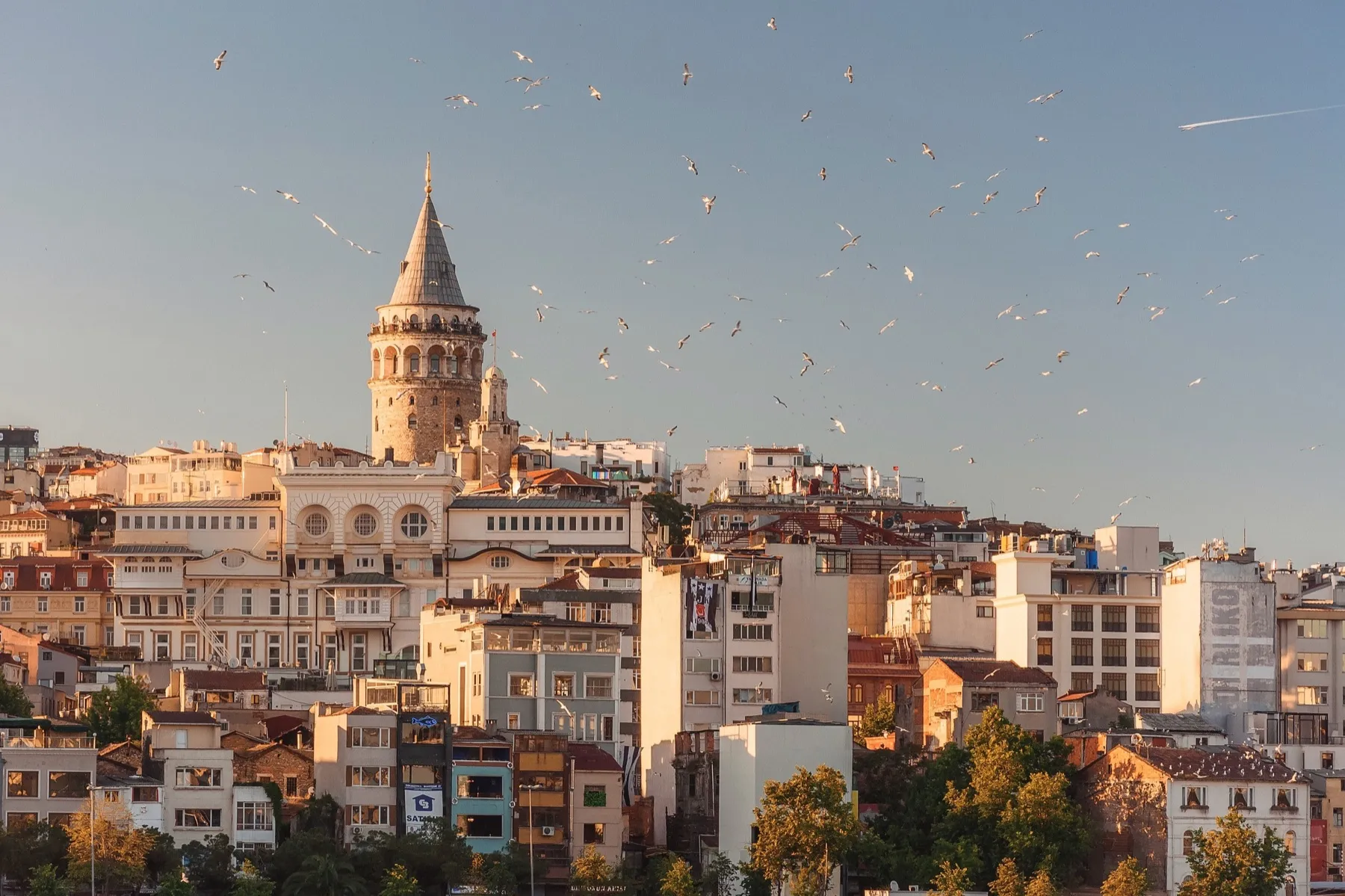
Walk the Galata Bridge from Karaköy to Eminönü: T1 tram down the middle, fishermen at the rails, restaurants on the lower deck. Stop mid-span and look up the Golden Horn. Leonardo's arch would have spanned about 240 metres; this bridge runs 490. His was placed "between Constantinople and Pera", not necessarily here. Open air, no hours.