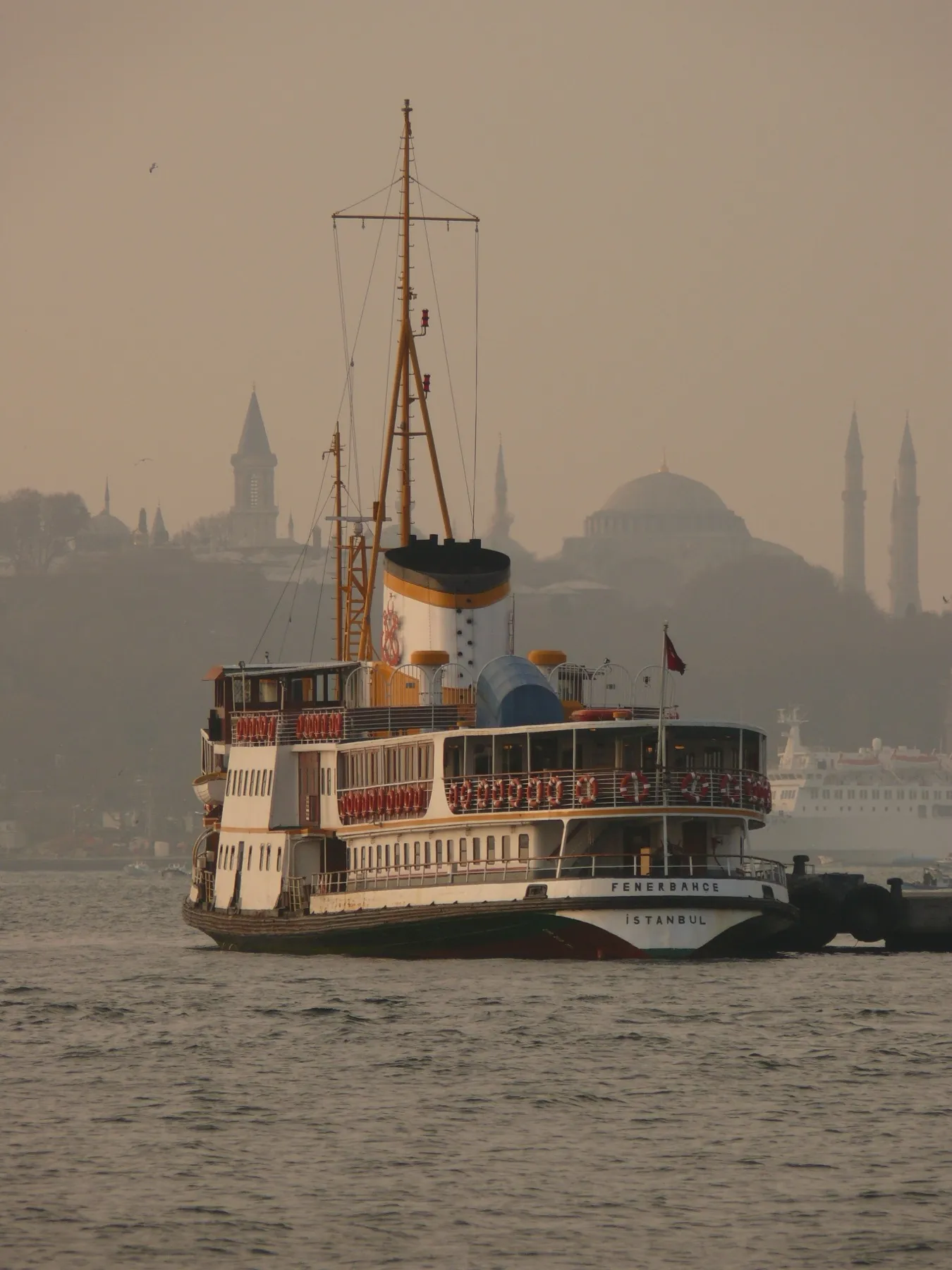
Beyoğlu's older name is a direction. "Pera" is Greek for "across": across the Golden Horn from the old city. For centuries, the other side.
In Byzantine times the slope was Sykai, "fig orchard"; by the 5th century the shore, later Galata, was a suburb.
Then Byzantium gave it away. After retaking the city in 1261, Emperor Michael VIII handed the Galata shore to the Genoese. When exactly? One source says 1267, another 1273.
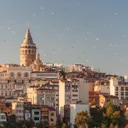
Genoa built walls and, in 1348, a tower.
After 1453 the European and Levantine communities stayed on this side. Sephardic Jews settled in Galata after 1492; a former church became the Arap Mosque late that century.
In the 1800s Pera was home to Europeans, Levantines, Christians and Jews, and among the first parts of the city with telephones, electricity and trams. In 1875 the Tünel opened, counted the world's second-oldest underground urban railway. In the 1890s the Pera Palace opened for Orient Express passengers, with the first electric elevator in Constantinople. Down in Karaköy, Bankalar Caddesi filled with banks, the Ottoman Bank's headquarters among them.
The Greek population left, especially in the 1950s and 60s; the riots of 6–7 September 1955 looted shops along İstiklal.
The avenue came back in 1990, pedestrianised, with the nostalgic tram. Gentrification followed. Cihangir, named for a son of Suleiman, has a bohemian reputation and many street cats.
A good base? In our 947-post Reddit set, Galata is the second-most-mentioned area in the 142 posts about where to stay.
Arrive by T1 tram to Karaköy, or M2 to Şişhane or Taksim; the F1 funicular links Taksim with Kabataş. Ride the Tünel up from Karaköy, then skip the İstiklal crowd for the side streets down toward Cihangir. Be respectful at the places tied to 1955.